
By Margaret Holborn
The Guardian Foundation is piloting an innovative project to scale media literacy in secondary schools in order to build teenagers’ resilience to mis and disinformation.
Media literacy skills, knowledge and confidence are fundamental in being able to navigate our digital world. Young people need to be inspired and supported to engage with the news and media they consume, understand how it is produced and develop key critical analysis skills so they can build resilience to mis and disinformation.
For 21 years, The Guardian Foundation’s award winning news and media literacy programmes Behind the Headlines (for young people aged 11-25) and NewsWise (for children aged 7-11) have been addressing this need by delivering innovative workshops, resources and training for schools and colleges rooted in journalism production, the curriculum and educational best practice.
Behind the Headlines’ workshops at our London Education Centre and virtually are heavily oversubscribed and limited capacity means that we can only work with one class from any organisation at a time. Feedback from educators highlighted that they wanted the impact of these sessions to be scaled across their organisation. Through our work we have come to recognise that secondary age students can be more responsive to youth led interventions and learning from their peers.
Funding from the DSIT programme grant has enabled us to realise our long term aim of a peer learning outreach project. Our 15 month Media Literacy Ambassador project, targeting schools with high free school meals and low levels of literacy in the Midlands, South and West Yorkshire and Greater Manchester regions, kicked off in January.
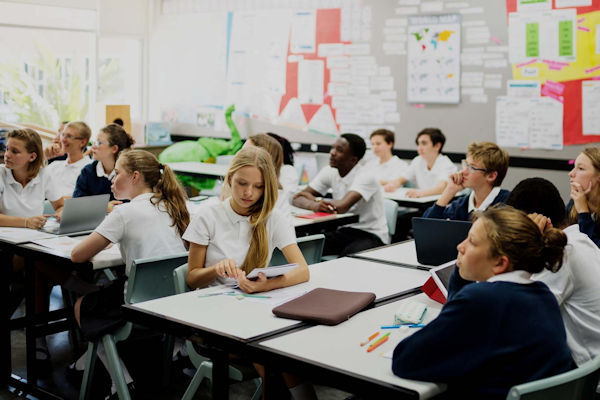
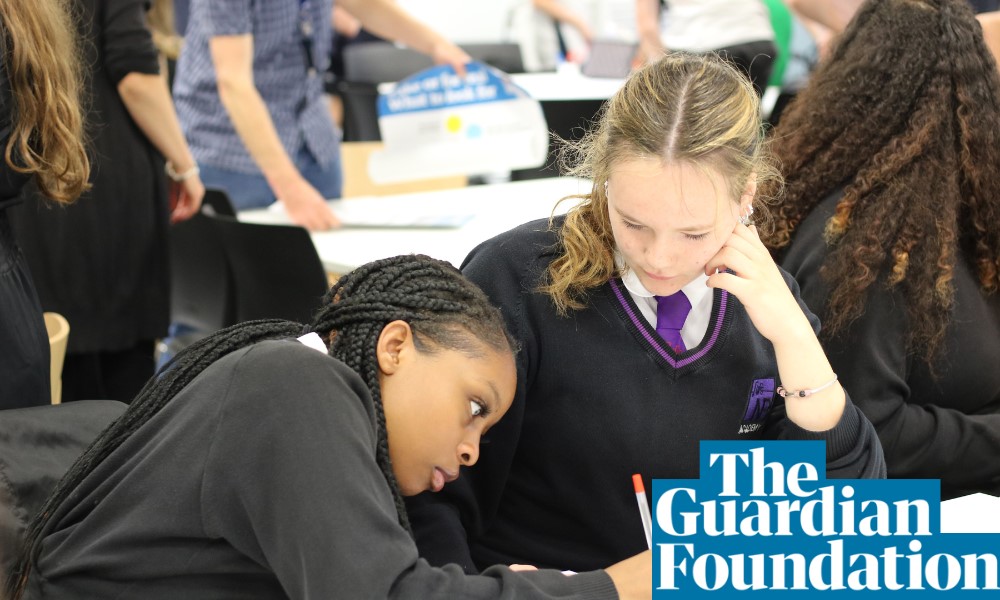
Our project team works with a selected group of students, to co-design and deliver sessions to their peers in their schools, who then go onto scale media literacy within their organisation with support from their teachers. Working with our evaluation partner the National Literacy Trust, evaluation is an integral thread running through the project informing iterative design, delivery and measuring impact. Consultancy from the outset and throughout from teacher and youth panels is also an important component in guiding and informing the project to ensure its efficacy.
The project goes beyond the initial day in the school or college which consists of a Fake or for real workshop, peer learning training sessions and teacher training. The Media Literacy Ambassadors then go on to co-deliver the Fake or for real workshop to more groups. There is virtual support before and after the sessions they deliver to their peers, as well as monthly resources to support students as they develop their Ambassador role.
It has been amazing to see how young people have engaged with the project. Discussing with students how they interact with social media and news sources, has been extremely interesting and informative and has led to great discussions.
“It is a fantastic initiative to engage young people…Young people have so much information in the palm of their hands, having to process it, navigate their way through it, and sort the fake from the real has never been more challenging. Seeing our student’s use techniques to identify trusted news sources, fact check and analyse news was a highlight for us.” Teacher taking part in the project.
Students have delivered the workshop through a range of subjects including English, Media Studies, PSHE, History and Citizenship. Some organisations have gone beyond the initial three classes and extended delivery into tutor groups, run assemblies and worked with their librarian to produce whole school campaigns. Others are cascading the learning, by developing their own training model.
“We’ve seen our Media Literacy Ambassadors ‘take over’ the delivery of other curriculum lessons and actively helping and supporting their peers across the curriculum. We believe all our students have developed some resilience to mis and disinformation. Our Ambassadors will be fantastic leaders when they train our new intake of students next academic year.” Teacher taking part in the project
Ambassadors are commenting on how taking part in and then delivering to their peers reinforces and strengthens their questioning, research and critical analysis skills when navigating online news and media.
“It was very informative and has taught me how to be more aware online of the things I read online and in newspapers.”
“It was interesting to see if younger children were as interested in the topic of false information as we were.” Media Literacy Ambassadors
Initial feedback shows that many students are receptive to a media literacy delivered to them by their peers.
“I really enjoyed today’s workshop and found I had learnt many skills that I would not have learnt otherwise.” Student in session delivered by Ambassadors
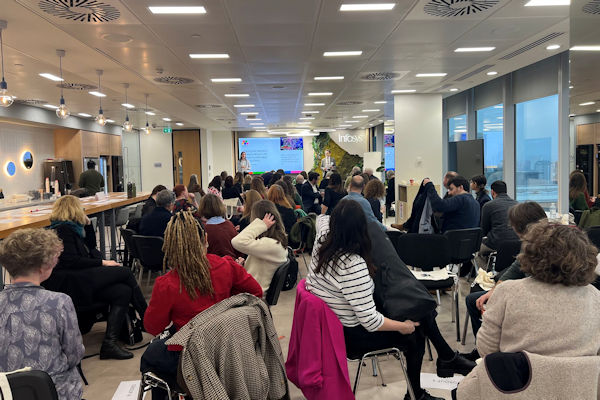
In July we held our first showcase event celebrating the Ambassadors’ achievements. It was also an opportunity for the students to network, find out about media careers and for them develop ideas to continue their role.
Having worked with schools and colleges across the target regions, hundreds of young people have trained as media literacy ambassadors and gone on to deliver sessions to many more of their peers.
During the autumn term we are recruiting and working with schools and colleges. We are also returning to 25% of the organisations we worked with to train a new cohort. This will help us gauge the impact and effectiveness of the programme in developing young people’s media literacy skills and also to measure progress.
In spring 2024 we will produce a media literacy peer to peer learning teacher guide alongside knowledge sharing and training opportunities.
When the pilot draws to a close we will be exploring the expansion of the Media Literacy Ambassador project to other parts of the UK. If you are an educator or librarian and want to find out more please do get in touch.
Margaret Holborn is the Head of Secondary and Higher Education at The Guardian Foundation.
The Guardian Foundation’s Behind the Headlines
behindtheheadlines@theguardianfoundation.org