

By Carolyn Waite
Digital skills are nationally recognised as a key area of development for staff in public libraries who offer support and assistance to those people who are digitally excluded and those who need help finding reliable information online. In May 2022 two new eLearning modules were launched on the Libraries Connected Learning Pool platform.
Libraries Connected is a charity, partly funded by Arts Council England as the Sector Support Organisation for Public Libraries. Part of its mission is to “Improve library services by developing and sharing best practice, providing training for library staff”. One way it achieves this is via a series of training modules covering library skills hosted on a Learning Pool platform.
The first module, ‘Key Digital Skills, focused on the role of libraries in supporting digital excluded citizens and those with low digital confidence. The second module, ‘Media and Information Literacy’, is funded by the Department for Culture Media and Sport and based on the five principles of the Online Media Literacy Strategy. The module addresses the key role libraries have in supporting citizens to use the internet safely, contribute to the online world effectively and make informed decisions. It aims to equip staff with skills and knowledge to share with library users and to make themselves more confident and informed.
The 30-minute module is interactive, illustrative, in bite-sized sections and should appeal to all types of learners. The module starts with a confidence gauge and ends with the same gauge, and a question asking what staff expect to get from the module. There is also a set of curated resources for developing learning which will be hosted on the Libraries Connected website and updated as necessary.
Modules were designed by UpSkill Digital working with a core group from Libraries Connected Information and Digital Offer group. Relevance to service delivery was ensured by both a staff survey and focus groups that took place to gauge initial levels of knowledge on the subject. Course content was designed to use relevant examples to demonstrate the principles and share good practice for both personal and work activities. Some elements will be a refresher for many staff, but from the survey results and focus groups it was clear that staff knowledge does vary, and confidence can be low.
The presentation of the concepts and the examples aimed to increase the confidence of staff to support and talk to users about decisions when they are online. The module ends with a quiz to reinforce the learning and build confidence for staff to promote media and information literacy. A list of resources for further learning can be found on the Libraries Connected website including checking personal use of passwords, social media account settings, and links for further learning.
The course is being completed by frontline library staff working in local libraries as well as staff who have a strategic overview of information literacy and digital services. The focus is primarily on the practical skills and competencies needed to be confident delivering the Libraries Connected Information and Digital offer.
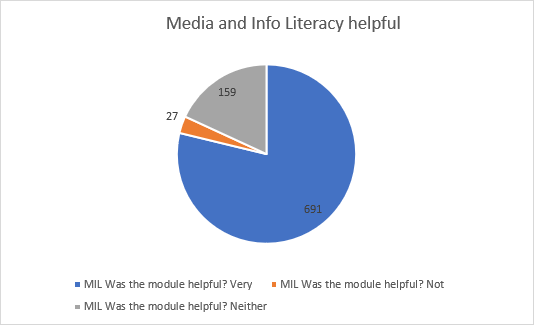
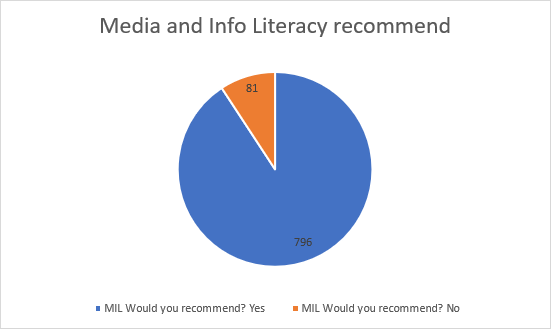
879 staff across England and Wales have completed the Media and Information Literacy module as of 14 November 2022.
Some comments from the staff who have completed the module:
“I feel I am able to distinguish better between trustworthy and non-trustworthy sources and I can use this information to assist library users in their research.”
” It is useful on a personal level and would be especially helpful in a customer facing role.”
” It backs up my personal knowledge and gives me greater confidence to support customers when online.”
” To consider the risks of sharing online content but also safely adapt key skills to use and contribute to online resources (social media) in positive and informative ways.”
” I really enjoyed the content of this course – very informative and relevant.”
” Very informative – Practical especially in regard to protecting our privacy and being responsible with our digital footprint.”